Chinese
行业动态
-

大直径不锈钢、铁镍基耐蚀合金管坯的供应商
23-Sep-Fri公司2009年通过ISO9001--2008质量管理体系认证,具有完善的质量控制体系,是浙江湖州永兴特种不锈钢有限公司、浙江久立集团有限公司合格供方,是大直径不锈钢、铁镍基耐蚀合金管坯**的供应商,并通过了压力容器和挪威船用管坯认证。作为中国锻造协会上海锻造协会会员单位,目前公司拥有国内外用户200余家。公司一贯坚持“以质量求生存、以质量求发展、向质量要效益”的质量方针,竭诚为广大客户服务。View details -

船用大口径不锈钢管坯供应商认证
23-Aug-Fri6月4日,湖州永兴特钢和挪威船级社一行五人,按挪威船级社工厂认证要求,对我公司人力资源组成、设备保证能力、工艺条件确认、产品检验等管理体系要素进行了逐项审核,审核组认为:质量管理体系运行有效,同意作为湖州永兴特钢的船用大口径不锈钢管坯合格供应商。View details -

国产工业机器人困境:核心部件缺席
23-Aug-Fri核心部件的缺乏,正是国产工业机器人的困局和要害,它让中国的工业机器人从一出生起就背着沉重的包袱,进退两难。在国内,工业机器人有着很大的应用市场,早在2014年,时任中国机械工业联合会会长的王瑞祥就表示,中国已成为全球**大工业机器人市场。可是,根据2017年中国工业机器人市场份额显示,目前国内的机器人市场还是被日本发那科、安川、德国库卡、瑞典abb“四大家族”牢牢控制在手里,国产机器人只有32.8%的市场份额。而且这些竞争大多还集中在中低端领域,高端领域国产工业机器人,连5%的市场份额都不到。可见,比起国际同行,国产机器人企业在国内、国际市场的占有率并不高,技术水平还是有着较大的差距,整个国家的机器人技术和产业现状,并不乐观。国产机器人处境为何如此尴尬?许多机器人厂家反应,国产机器人主要的问题是,核心部件只能靠进口,成本降不下来,又很难形成批量化生产,即使是成功销售出去的机器人,重要组件也都来自进口,只有极少数的企业有能力实现某一类组件的自主研发,导致了必须比国外产品卖的还贵,造成市场的恶性循环。核心部件的缺乏,正是国产工业机器人的困局和要害,它让中国的工业机器人从一出生起就背着沉重的包袱,进退两难。一般来说,工业机器人有三大主要零部件,分别是减速器、控制器和伺服系统。在大部分机器人产品中,这三者占到机器人总成本的一半以上。机器人产业研究专家罗百辉曾经分析,以一台普通国产的50公斤级工业机器人为例,减速器、伺服电机、伺服驱动三者所占的成本分别达到了35%、14%、13%。如果把机器人看做一个人的话,控制器就相当于机器人的脊椎和大脑。串行或并行的结构的控制器,具有灵活的可编程系统,用来控制机器人完成任务或协助人类完成任务。相比较而言,在这一块国内与国外的差距是最小的,因为技术难度不大,所以国内一些比较成熟的机器人公司都能够自主研发。减速器更像是机器人的手、脚乃至全身的关节,它作为最基本的机械部件,帮助机器人整体进行周转与调用,机器人减速器主要分为rv减速器和谐波减速器。目前,全世界70%的精密减速器市场都被日本哈默纳科和纳博特斯克所占据,中国尤甚。而国外品牌质量较好的优质减速器,在国内往往要花费2~3倍的价格才能采购得到。幸运的是,这两年里国产减速器也是大力发展,格外争气。比如2017年,国内减速器市场需求约30万台,国产减速器就占了市场的约20%,对国外减速器的需求量也由2016年的近85%降到了80%以下。相信在不久的未来,这两个数字会越发接近。从业者们普遍认为,国产机器人核心部件生存环境最为艰难,技术差距最大的还是伺服电机系统。伺服电机是机器人的执行单元,影响机器人工作性能的主要因素。以西门子、罗克韦尔等为首的欧美伺服过载能力强,动态性能好,而以安川松下等为首的日系品牌,则占了体积小,价格亲民等的便宜;至于国内,尽管一些国内厂商似乎也能生产伺服电机,但是可靠性达不到要求,故障率太高,很少有机器人厂家敢于使用。我国的伺服市场中,技术与性能比较先进的日系产品,凭借着良好的性价比雄踞近60%的中国市场,紧随其后的是欧美和台湾,分别占据了20%和10%,而国产伺服电机的市场份额,从2015到2017年,都只有不到20%的份额。国之重器,不可予人。让这些核心零部件实现国产化,高端化,加大研发投入、提高核心技术能力等,是打通国产机器人难题的任督二脉,破解民族机器人品牌崛起之困的关键因素,也是国产机器人百多困境,走向崛起的必经之路。唯有如此,国产工业机器人才能降低制造成本,保持**的稳定性和品牌口碑,在国内,乃至世界上充分提高我们的市场竞争率。View details
- News
- Recommended Products
-
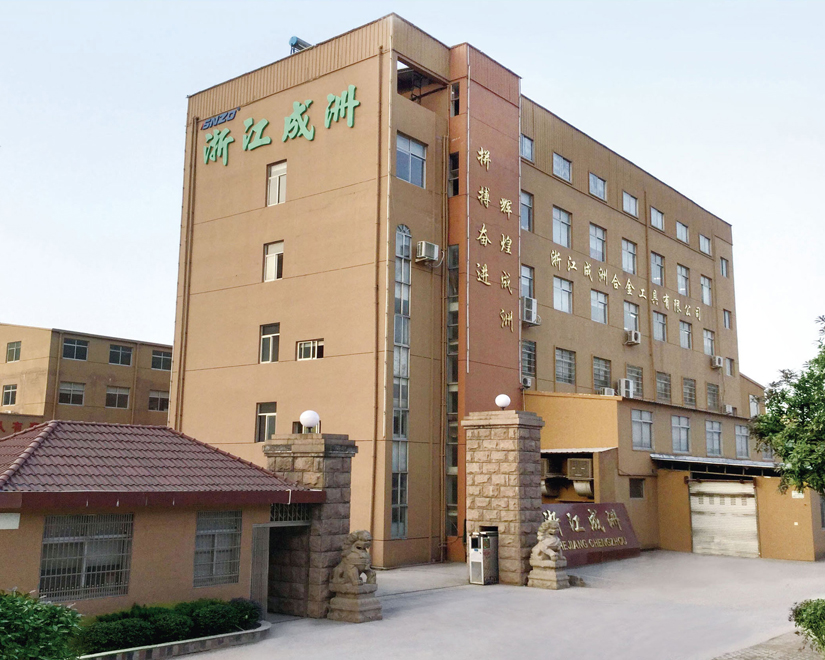
Warm congratulations, Zhejiang Chengzhou Alloy Tools Co., Ltd. website is fully online!
Warm congratulations, Zhejiang Chengzhou Alloy Tools Co., Ltd. website is fully online!
-
Supplier of large diameter stainless steel, iron-nickel based corrosion resistant alloy pipe blanks
In 2009, the company passed ISO9001-2008 quality management system certification, with perfect quality control system, is Zhejiang Huzhou Yongxing Special Stainless Steel Co., LTD., Zhejiang Jiuli Group Co., LTD. Qualified supplier, is the only supplier of large diameter stainless steel, iron nickel based corrosion resistant alloy pipe blank, and passed the pressure vessel and Norway Marine pipe blank certification. As a member of China Forging Association Shanghai Forging Association, the company has more than 200 domestic and foreign users. The company has always adhered to the "quality of survival, quality of development, quality to benefit" quality policy, dedicated to our customers.
-
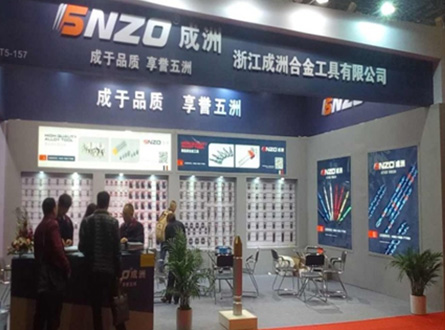
Always active in all kinds of hardware tools exhibitions at home and abroad
Always active in all kinds of hardware tools exhibitions at home and abroad
-
Marine large caliber stainless steel pipe billet supplier certification
On June 4, Huzhou Yongxing Special Steel and the Norwegian Classification Society five people, according to the Norwegian classification Society factory certification requirements, the company's human resources composition, equipment assurance ability, process conditions confirmation, product inspection and other management system elements were audited, the audit team believes that: Quality management system runs effectively, agreed to be Huzhou Yongxing Special Steel Marine large caliber stainless steel pipe billet qualified supplier.
-
Domestic industrial robot dilemma: absence of core components
The lack of core components is the dilemma and key of domestic industrial robots, which makes China's industrial robots carry a heavy burden from birth and are in a dilemma.In China, industrial robots have a large application market, as early as 2014, Wang Ruixiang, then president of the China Machinery Industry Federation, said that China has become the world's largest industrial robot market.However, according to China's industrial robot market share in 2017, the current domestic robot market is still Japan Fanuc, Yaskawa, Germany Kuka, Sweden abb "four families" firmly controlled in the hands, domestic robots only 32.8% of the market share. And most of these competitions are still concentrated in the low-end areas, high-end areas of domestic industrial robots, even less than 5% of the market share. It can be seen that compared with international counterparts, domestic robot enterprises in the domestic and international market share is not high, the technical level is still a large gap, the entire country's robot technology and industry status quo, is not optimistic.Why are domestic robots in such an awkward situation?Many robot manufacturers react, the main problem of domestic robots is that the core components can only be imported, the cost can not be reduced, and it is difficult to form mass production, even if the robot is successfully sold, the important components are from imports, only a small number of enterprises have the ability to achieve independent research and development of a certain type of component, resulting in the need to sell more expensive than foreign products. Create a vicious circle in the market.The lack of core components is the dilemma and key of domestic industrial robots, which makes China's industrial robots carry a heavy burden from birth and are in a dilemma.In general, industrial robots have three main parts, which are reducer, controller and servo system. In most robot products, these three accounts for more than half of the total cost of robots. Robot industry research expert Luo Baihui has analyzed that taking a common domestic 50 kg industrial robot as an example, the cost of the reducer, servo motor, and servo drive accounted for 35%, 14%, and 13% respectively.If you think of the robot as a person, the controller is the spine and brain of the robot. A controller with a serial or parallel structure, with a flexible programmable system, used to control a robot or assist a human in completing a task. In comparison, the gap between domestic and foreign countries in this area is the smallest, because the technical difficulty is not large, so some of the more mature robot companies in China are able to independently develop.The reducer is more like the joint of the robot's hands, feet and even the whole body. As the most basic mechanical part, it helps the robot to carry out turnover and call as a whole. The robot reducer is mainly divided into rv reducer and harmonic reducer. At present, 70% of the world's precision reducer market is occupied by Japan's Hamanaco and Nabotsk, especially in China. And foreign brands with good quality high-quality reducer, often spend 2 to 3 times the price in order to purchase. Fortunately, the domestic reducer in the past two years is also vigorously developed, especially competitive. For example, in 2017, the domestic reducer market demand of about 300,000 units, the domestic reducer accounted for about 20% of the market, the demand for foreign reducer also dropped from nearly 85% in 2016 to less than 80%. I believe that in the near future, these two figures will be closer.Practitioners generally believe that the survival environment of domestic robot core components is the most difficult, and the biggest technological gap is the servo motor system. Servo motor is the execution unit of robot and the main factor affecting the performance of robot. The European and American servo overload capability led by Siemens, Rockwell, etc., is strong, and the dynamic performance is good, while the Japanese brands led by Yaskawa Panasonic, etc., account for the small size and the price is cheap; As for the country, although some domestic manufacturers seem to be able to produce servo motors, but the reliability can not meet the requirements, the failure rate is too high, few robot manufacturers dare to use. In China's servo market, Japanese products with more advanced technology and performance occupy nearly 60% of the Chinese market with good cost performance, followed by Europe, the United States and Taiwan, accounting for 20% and 10%, respectively, while the domestic servo motor market share, from 2015 to 2017, only less than 20% of the share.The most important instrument of the state must not be given to others. Let these core components to achieve localization, high-end, increase research and development investment, improve core technical capabilities, etc., is to open up the two arteries of domestic robot problems, crack the key factors of the rise of national robot brands, but also the domestic robot more than 100 difficulties, the only way to rise. Only in this way, domestic industrial robots can reduce manufacturing costs, maintain better stability and brand reputation, and fully improve our market competition rate at home and in the world.